Author: admin

A Summer STEAM Experience
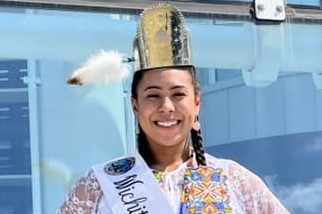
Photo of Isabella Fridia

By Isabella Fridia, TYJRC Young Leader

Since I was young I have always had a strong interest in STEM (Science, technology, engineering, and mathematics). I participated in the engineering and science fairs in grade school. I even made it to state and received many awards. In high school, I got to learn more complex sciences and math and took a strong interest in Anatomy and Physiology. This has become my passion in college. Currently, I am a sophomore attending the University of Denver majoring in Physiology in Health and Disease. This summer following my freshman year, I wanted to share my passion for science with the next generation. I was able to do this by working as a STEAM (Science, Technology, Engineering, Arts and Math) intern with the Oglala Sioux Tribe child care. It was an amazing experience. I loved working with youth and helping the community.

As STEAM Interns our duties consisted of planning and implementing STEAM activities and networking with other agencies to provide safe and fun summer activities for children. Every day was filled with fun and adventure. In the office, there was a lot of brainstorming and thought that went into our activities. One of my favorite activities was creating balloon cars. The children were given a balloon, straw, a piece of cardboard, two wooden dowels, and four wooden wheels. There were instructions that guided youth on how to construct the cars. Then they could blow in the straw with the balloon attached and watch the balloon car go. This gave young children the opportunity to see how science is all around us and that we can use everyday household items to create and experiment. All of the activities we planned were fun and educational.

I also loved getting involved in the community. We set up several glow walks throughout the districts to raise awareness about the program and get families moving. We provided everyone who came with a neon t-shirt and glowsticks. It was fun to see everyone enjoying

themselves. These community outreach events were a highlight of my time with childcare. There were some bike races for kids as well. With our other resources, we provided bouncy houses and obstacle courses for community events. The youth loved it. During the community Fourth of July celebration, we brought our water slide bouncy houses. It felt good to see all the youth running around happy with smiles. Later in the summer, we got to take some of the youth to Horse Thief Lake outside of Rapid City, SD. Many of them got to Kayak and played on the water. These lake days gave youth exposure to environmental sciences.

Working with childcare this summer was an experience I will never forget. Programming like this is important to serving tribal youth. They give youth a healthy outlet and something to do. One of the greatest concerns of young people on the reservation where I live is that there isn’t anything to do. The Oglala Sioux Tribe Child Care gave youth experiences on and off the reservation to learn and grow. We also sparked an interest in STEAM for our younger relatives. Indigenous people do not have enough representation in STEAM fields. Who knows? Maybe we have created a path for the next inventor, doctor, or mathematician.

Resources

Programs/Events:

AISES | Advancing Indigenous People in STEM

Description: Mission of AISES, as included on their website reads, “The American Indian Science and Engineering Society (AISES) is a national nonprofit organization focused on substantially increasing the representation of Indigenous peoples of North America and the Pacific Islands in science, technology, engineering, and math (STEM) studies and careers.” AISES works with more than 150 K–12 schools (as well as colleges and professionals). Their website provides resources for students, educators, and professionals working with youth in STEM fields, as well as links to partner organizations, scholarships and other opportunities in the field for indigenous youth.

AISES Fairs | National American Indian Science & Engineering Fair

Description: Advancing Indigenous People in Stem (AISES)’s national science fair is “an SSP-affiliated science fair and is the only national science fair centered around acknowledging and supporting indigenous students partaking in science and engineering competitions.”

 Email [email protected] for more information.

The Alaska Native Science & Engineering Program – ANSEP: Alaska Native Science & Engineering Program

Description: Located in Anchorage, Alaska, ANSEP’s objective is to “effect systemic change in the hiring patterns of Alaska Natives in science and engineering by placing our students on a career path to leadership. Our goal is to provide an excellent education and a life of unlimited possibilities for every Alaskan.” The organization provides opportunities for youth from elementary school ages through university.

STEM Education for Tribal Youth | EBF Learning Center

Description: EBF Learning Center is a 501(c)3 nonprofit located on the Muscogee (Creek) Nation Reservation in Oklahoma.  Their mission is to help improve the lives of Native people, plants and pollinators through innovative community based programs that emphasize capacity building, cultural preservation, and sustainability.

Other Resources:

Description: Article in conversation with “Kathy DeerInWater of the American Indian Science and Engineering Society discussing “the importance of increasing STEM access for Native American students.” Article includes additional links and resources.

Description: As noted on their website, “The ISTEAM collaborative is supporting Indigenous resurgence through (re)making relations with lands, waters, and each other towards just, sustainable, and culturally thriving futures.”

Description: Article that explores in-depth some of the programs included above (e.g., AISES and ANSEP) with applicable links and helpful information.

Description: A 2017 article outlining the accomplishments of and conversations with 18 successful Native folks working in the STEAM field.

Breaking Down the Barriers for Indigenous Youth to Access Mental Health Services

By Jordan Gibson, Tribal Youth Training and Technical Assistance Specialist, Tribal Youth Justice Resource Center

A photo of Waianae coast provided by the author.

I am an Indigenous behavioral health practitioner and a licensed Behavior Analyst and I have worked in this field for almost a decade providing behavioral health services for those on the autism spectrum. I live in Hawaii and I have worked in Native Hawaiian community of Waianae, Hawaii.

From my experience, the most effective treatment plans for Native people are those that are culturally relevant, coordinated, and community-focused. I would like to share with you an example of a case study where all three elements were in place, so you can think about what this would look like in your community. 

Before my current position with the Tribal Youth Justice Resource Center, I worked at Imi Ola Autism Services, a Native Hawaiian Autism services non-profit, and we received a referral for an at-risk teen. His challenges were representative of the challenges of the community. He was diagnosed with other learning differences, depression, has a mother who lives in the community but lost custody of both her son and daughter, and the teen’s current foster family is attending family counseling sessions. This kind of interwoven web of trauma and need for multiple services is present in our families throughout Indian Country and it is essential that the services provided are interwoven as well. This is something we were successful at in this instance. 

The youth needed services from a number of different behavior health providers, including: a psychologist, a behavioral analyst, a behavior technician, a psychiatrist, a school psychologist, and a social worker. I was the behavior technician on the team at the time. Waianae Coast Comprehensive Health Center (WCCHC), the Native Hawaiian-focused health center in the community, believed in coordinated care and was instrumental in aligning services for the teen and their family. WCCHC housed the psychologist and the psychiatrist that worked with the family and was able to provide our teen with assessments in a timely manner so the behavior analyst and I could provide applied behavior analysis services at Imi Ola Autism Services. Waiting for assessments and referrals is a barrier for care especially in oftentimes more remote indigenous communities. WCCHC also trains, places, and coordinates school psychologists in the elementary school, middle, and high schools in the community. The School Psychologist was able to inform us of what the teen was going through in his school environment. The social workers also have a close relationship with the comprehensive center. They worked with us to gain an understanding of his foster home situation. 

As an Autism service provider in the community, we could not move forward working with families until we were given authorizations from insurance, which are based on psychological assessments.  WCCHC made sure that our clients were ready to receive services with us immediately by using psychologist practicum students to do the assessments, which expedited the process. There is often a waiting list here. When providing our services to the youth and his family, we were in constant communication with all of the different teams providing care. All of the different parts coordinating and working together led to the family receiving all the appropriate services. As the behavior technician, I was aware of pertinent information that came from the psychologist and the psychiatrist. I was aware of pertinent information regarding their foster care situation from the social worker. I was also aware of our client’s interactions at school through the school psychologist. We were sharing our data with the different parts of the team as well. The information sharing was essential in our ability to develop programs and social goals.

Another key part of the success in this situation is that WCCHC intentionally trains and mentors Native Hawaiians and other indigenous practitioners in behavioral health roles to serve the community and coordinates with Native Hawaiian and other indigenous practitioners so that all of our work is culturally relevant. The coordination also helps with families receiving all of the services they require. They also hold training and ceremony for staff who are not Hawaiian. Often times, health care providers in Indian Country refer out and that referral comes with a waiting list that could slow down or even halt services. When there are coordinated care systems in place, those lapses do not happen as much, and the various services providers stay in the loop and can plan ahead.

I was fortunate to be a part of an indigenous community where so many services were a part of the community already. I know in Indian Country that this is not always the case. Many communities have to partner with outside agencies. In these instances, I think it is important to build relationships so that a coordinated care team can still exist with the remote providers. This way, when remote providers enter the community, they have clear goals and targets to assist families on an appropriate timeline. When a Community Health Center’s primary focus is on coordinated care, we can achieve great things for our families. This youth was able to graduate and has a job in the community and I am confident he will be able to live on his own at some point in his adulthood.

Mahalo Nui Loa,

Jordan Gibson

Tribal Youth Training and Technical Assistance Specialist

Tribal Youth Justice Resource Center

Resources:

April is Child Abuse Prevention Month

Staff Reflections- Teresa Nord, Training and Technical Assistance Specialist, Tribal Youth Justice Resource Center

As we’ve transitioned from a time of solitude and reflection of the winter season to the birth of spring, we remember. We remember our relatives that were forced from their homes and families and taken into residential boarding schools. Our grandmothers and grandfathers, mothers and fathers who as children were beaten and tortured and sometimes even murdered, for just simply being Native American. The mass graves that have recently become the top story on every social media platform and at the kitchen table in every Native home. The marches, candle light vigils and the wearing of orange to bring awareness are but a small contribution to the remembrance of the devastation and abuse of our now elder relatives. One could only hope that our collective community pain and trauma ended with the closure of boarding schools and the conclusion of mass removal therefore had also stopped. Sadly, an era of Indian child removal continued through the “adoption era” where Native youth were increasingly removed and placed with non-Native families, resulting in the Indian Child Welfare Act of 1978.

We see the residual impacts of colonization resonating through our communities and continued cyclical violence and trauma impacting our youth. We know American Indian children are victimized  at alarming rates, recent data indicating victimzation at a rate of 14.8 per 1,000.  These statistics are interwoven with violence against Indian women. In recent studies it is shown that 49-70% of cases, men who abuse their partners also abuse their children. These numbers are horrendous and the resultant removal of youth from their homes perpetuates the cycle of removal- “research and data from states tell us that American Indian/Alaska Native (AI/AN) children are disproportionately represented, or overrepresented in state foster care systems nationwide,” (NICWA, 2021). This is of great concern, since we also know that children placed in foster care are at risk for becoming involved in the juvenile justice system.

One might ponder on these known facts and wonder what can be done to help prevent or support those who are at risk or have experienced child abuse. As advocates for Native American youth we can pause to reflect on numerous questions that can spur us to action- questions such as How do we recognize when abuse is happening? Are we building trusting relationships with youth and their families in order to support them? Have we trained our staff in areas of prevention of child abuse and neglect? Do we have resources to provide families that may be at risk? If there is abuse occurring can we provide support to prevent out-of-home or out-of-community placement? With support from the Tribal Youth Justice Resource Center and our partner the National Native Children’s Trauma Center we can provide referrals and resources to support your Tribal Youth Program in answering the questions above. Please know you are not alone in your venture to end child abuse in your tribal community. Let us be a support in ending child abuse and out-of-home and out-of-community placement together.

Free Training: Training to support tribal communities is freely available through the Tribal Youth Justice Resource Center

• Tribal Youth Justice Resource Center, a cooperative partner of the Office of Juvenile Justice and Delinquency Prevention offering free training and resources to support tribal youth prevention, intervention, and court-based programs.
Visit https://www.tribalyouth.org/contact-us/technical-assistance/

• The National Native Children’s Trauma Center, a Category 2 Treatment and Services Adaptation Center within the Substance Abuse and Mental Health Service Administration’s National Child Traumatic Stress Network. Visit https://www.nnctc.org/

Web-Resources and Fact Sheets:

• Identification of Child Abuse and Neglect- A collection of resources and information that can support the identification of child abuse and neglect. Resource links to topics such as neglect; physical abuse; sexual abuse; emotional abuse; training; with state and local examples. Visit https://www.childwelfare.gov/topics/can/identifying/ Child Welfare Information Gateway, a service of the Children’s Bureau, Administration for Children and Families, U.S. Department of Health and Human Services

• Child abuse and Neglect, an online resource page with myths and facts about child abuse and neglect, definitions, and ways to respond to suspected abuse and/or neglect. Visit https://www.helpguide.org/articles/abuse/child-abuse-and-neglect.htm  HelpGuide International.

• Understanding Adverse Childhood Experiences, Targeted Resources for Tribal Child Welfare, a fact sheet that provides information about Adverse Childhood Experiences (ACEs) with links to resources and information for providers. Capacity Building Center for Tribes, (2018) Visit https://www.tribalinformationexchange.org/files/products/adversechildhoodexperiences.pdf

Free Code Development and Policy Publications:

• Responses to the Co-Occurrence of Child Maltreatment and Domestic Violence in Indian Country: Repairing the Harm and Protecting Children and Mothers, (2011) http://www.tribal-institute.org/download/OVWGreenbookReportHVS_TD_7-18.pdf

• Tribal Law and Policy Institute, Tribal Legal Code Resource: Crimes Against Children, A Guide for Drafting or Revising Tribal Laws on Crimes Against Children, (2022) https://www.home.tlpi.org/_files/ugd/3fb28d_3bef9fefffd14113a17f25a16a143307.pdf

This project was supported by Grant #15PJDP-21-GK-04048-MUMU awarded by the Office of Juvenile Justice and Delinquency Prevention, Office of Justice Programs, U.S. Department of Justice. The opinions, findings, and conclusions or recommendations expressed in this publication/program/exhibition are those of the author(s) and do not necessarily reflect those of the Department of Justice.

Absentee Shawnee Tribe Celebrates 20th Year of “Camp Nikoti”

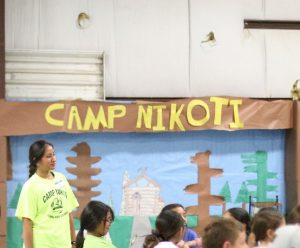
This year the Absentee Shawnee Tribe (AST) celebrates the 20th anniversary of “Camp Nikoti.” The camp, which takes place over the course of the summer months is open to elementary and middle-school age youth and coordinated and implemented by the youth program, education department and contributing volunteers and partners. Discussing the meaning behind the camp’s name, Tresha Spoon, AST Education Director shares that, “In the Shawnee language, nikoti is the number one. The initial group involved with establishing the camp felt that by the end of the camp, the group is one group, one family.” Throughout the camp, youth are able to engage with peers, camp staff, youth counselors, and guest speakers from various Tribal programs. As part of skills-building, cultural, and pro-social learning opportunities, campers participate in coordinated games, crafts, physical fitness, field trips and special activities.

Camp Nikoti Counselor Speaking
AST Tribal Youth Program Staff Blake Goodman speaks to youth campers.
AST tribal youth program staff shay fixico and campers
AST Tribal Youth Program Staff Shay Fixico and campers listen to directions for the next outdoor game.

In celebration of the 20th anniversary, camp staff and youth decorated the building with prior year camp themes. In discussing the longevity of the camp, Tresha Spoon notes that the camp began shortly after she began working for the AST, sharing that “This camp has been going on for a long time, it’s really neat that some of the youth who are participating have parents who were a part of this camp as teenagers.” The Absentee Shawnee Tribe is comprised of approximately 4,500 members from the Big Jim and White Turkey bands of Shawnee people. These bands migrated from colonial encroachment and were subsequently removed to present day Little Axe and Shawnee areas of Oklahoma. [1] Youth who do not reside near the camp that is based in Little Axe are bussed in from Shawnee. The AST is an OJJDP FY2019 Tribal Youth Program (TYP) grantee and has also received TYP funding in previous years.

Blake Goodman, AST Youth Program Coordinator, shares “this year we have about 40 youth who are participating, it’s nice to have the kids back together.” Like many other communities, AST youth program services were impacted by the COVID-19 pandemic. AST youth program staff worked to find alternate ways to stay connected with youth and implemented virtual tutoring and support for youth engaged in the daily after school program.

The 2021 camp is proving to be lively and energized and began with welcomes, introductions, and “get-to-know-you” games. Small groups of youth led by teen group leaders have worked together to create team names, flags and sing songs together. Sharing more about program activities, AST Tribal Youth Resource Specialist Shayanne Fixico comments that “each youth has a daily journal to write in and to keep for themselves, we don’t read them, it’s more for them to keep and have.”

Youth enjoy recreation as part of the daily activities.

Along with daily activities, camp organizers also plan some evening events. These events are optional and are an additional element that supports family connection and engagement. In response to considering what impacts Camp Nikoti has on youth, Blake Goodman shares that a highlight for him is “watching the kids come in their first year nervous and timid, and watching them grow over the years and then transition into volunteering or working for us.” Tresha Spoon shares “I hope the kids see the resiliency of their tribe, their people and although we’ve lost tribal elders and other loved ones and our lives have been changed forever in some ways, we as native people pick up and carry on. Hopefully, they will see how much their tribe cares for their health and well-being by offering this camp for twenty summers. Ultimately, I hope they know we love them and are here for them no matter what’s going on around us.” With such caring mentors and leaders, Camp Nikoti present and future is sure to provide many special memories for AST youth.


Native Youth and the Missing and Murdered Indigenous Peoples Crisis: Promoting Protective Factors as We Advocate for Change

By Ashley Trautman, National Native Children’s Trauma Center

Indian Country is challenged by a crisis that requires the attention of tribal leaders, spiritual and cultural teachers, elders and our communities.  Many of our families have a loved one who has gone missing or has been murdered. There is inadequate information about missing American Indian and Alaska Native (AI/AN) children. In 2016, Amber Alerts in Indian Country indicate that 7,700 AIAN children and youth were identified as missing (National vs Native Missing Youth Statistics-A Side by Side Comparison).  It is believed that the number is a low representation of the number of missing and murdered children and youth and a grossly low accounting of missing and murdered Indigenous people.

Missing and Murdered Indigenous People (MMIP) has been understood as a law enforcement issue, but understanding the issues faced by Indigenous families and communities requires a multi-system approach. We know our relatives face multiple issues around the health and wellbeing in their families and communities which can increase their vulnerability to going missing or being murdered.  A community response to support children, youth, and families to prevent and intervene before the child or youth goes missing is critical, and ICWA, Courts, and Law Enforcements have a primary role in contributing to a systemic community response as well. Cross system collaborations are important for actions that create more comprehensive strategies to ensure our children and youth are protected, nurtured and loved.

An important consideration when supporting youth, families and communities impacted by MMIP is how we honor resiliency and promote protective factors for the youth we serve. We know that resilience can exist naturally, be built and can erode over time (National Native Children’s Trauma Center [National Native Children’s Trauma Center], n.d). To foster resilience, some approaches might include:

  • Creating opportunity for youth to connect to culture. Cultural connectedness (knowledge of and engagement with a youth’s tribal culture) has strong associations with positive mental health above and beyond other social determinants of health (Snowshoe et al., 2017).
  • Cultivating youth’s ability to building healthy relationships. We know that having at least one trusting relationship with a supportive adult is the single most important protective factor for youth. Remaining consistent and offering support that is unconditional may build trust with youth and be a powerful buffer against adversity (NNCTC, n.d).
  • Create opportunities for youth to engage in activities where they can gain a sense of competency.  This gives youth a sense of control over their life and builds an understanding that they can overcome difficulties (NNCTC, n.d.).

Something we should also consider is how to resist placing the responsibility for all healing within the individual. The expectation that individuals, families and communities can “pull themselves up by their bootstraps” can evoke shame when difficulties persist despite attempts to heal (NNCTC, n.d.). This perspective also neglects to consider how systemic forces such as historical trauma and colonization contribute to ongoing experience of trauma within many communities. Supporting healing through strong family ties, strong cultural identity while advocating for resources and community-based services may be a more comprehensive approach that responds to the complex experience of trauma.

References:

National Native Children’s Trauma Center (n.d.). Trauma in tribal communities [PowerPoint slides]. Unpublished.

National vs Native Missing Youth Statistics-A Side by Side Comparison. Retrieved from https://ojjdp.ojp.gov/publications/national-vs-native-missing-youth-statistics.pdf

Snowshoe, A., Crooks, C.V., Tremblay, P.F., & Hinson, R.E. (2017). Cultural connectedness and its relation to mental wellness in First Nations youth. The Journal of Primary Prevention, 38(1-2), 67-86.

Intern Reflections: 2021 OJJDP Tribal Youth Virtual National Conference

Elise Hocking, Intern, Tribal Youth Justice Resource Center

As part of my internship with the Tribal Law and Policy Institute, I had the privilege of participating in the 2021 OJJDP Tribal Youth Virtual National Conference themed, “Shaping Brighter Futures with American Indian, Alaska Native Youth and Tribal Communities- Strengthening Resilience, Promoting Healing, Restoring Culture,” from March 29 – April 2, 2021. The wealth of knowledge shared throughout the conference deepened my understanding of issues affecting Indigenous youth and best practices in addressing these challenges and advancing the conference’s goals of “strengthening resilience, promoting healing, restoring culture” in tribal communities.

The 2021 OJJDP Tribal Youth Virtual National Conference was a powerful week of reflection and collaborative learning. The Day 1 “Panel: Youth Voice” facilitated by Tasha Fridia was the most moving session of the conference for me. Indigenous youth panelists gave voice to the issues impacting themselves and their peers and called for tribal communities to draw on their multiplicity of strengths and forms of caregiving and resilience to support youth in navigating these challenges. By highlighting the experiences of youth, this session reaffirmed my calling to advocate alongside youth and support the sovereign rights of Tribal communities. The panelists connected their values to those enacted by their tribal communities for time immemorial and called upon their relatives, supporters, and advocates to meet the needs of youth today to reproduce brighter Indigenous futures.

On Day 3 of the conference, I presented alongside Anna Clough and Angela Noah during the “Innovative Strategies – Tribal Youth Courts and Peer-Led Processes” session. By sharing models of youth-led justice processes and describing the benefits of centering youth leadership, this session prompted conference attendees to reflect upon the ways in which youth can be engaged in their specific context to hold each other accountable and cultivate strong, connected, and caring communities.

Anna’s overview of the different youth court and peer-led processes models emphasized youth-led processes as practices of sovereignty, community-building, and harm reduction and reparation. Drawing on her own experience with Chemawa Youth Peer Court, Angela provided insight into the ability of youth court models to build self-esteem, responsibility, and leadership among Indigenous youth.

In addition to equipping youth with valuable skills, youth court models also allow for a more comprehensive evaluation of harm and focus on skill-building, affirmation, and positive behavioral growth, rather than punitive discipline. Although my experience with youth-led processes is not in tribal communities, I shared that youth-led restorative practices have the potential to harness the collective knowledge of youth to shape plans of repair that are achievable and aim to draw youth further into the community, rather than ostracizing or marking youth as undesirable.

I look forward to continuing to learn and engage this generative and critical work of supporting Indigenous youth and learning through my internship experience with the Tribal Law and Policy Institute.

Strategic Planning

By Ethleen Iron Cloud-Two Dogs, Senior Training and Technical Assistance Specialist, Tribal Youth Justice Resource Center

Recently we posed a question to participants of strategic planning training about how their strategic plan guides their work. Tribes offered the following feedback about the benefits of developing strategic plans

  • Having a communication plan helped to tailor their outreach and education efforts to parents and the general public. Additionally, their social marketing materials like brochures and newsletters increased engagement in the program.
  • Action plans also helped to define activities, create and keep timelines and revise processes for the juvenile court to respond to youth issues more effectively. Action planning also helped to keep staff on track with future initiatives.
  • Forming and maintaining partnerships as part of the strategic planning process increases capacity to serve more youth, for example in the area of treatment services.

Generally, strategic planning can help groups, organizations, schools, and communities come together to tackle a particular issue.  Having a plan increases the likelihood of meeting shared goals and objectives and decreases the likelihood of burn out and mission drift.  However, keeping a strategic plan on the front burner, so to speak, requires commitment and consistent follow up.  Trying to achieve a program’s vision without a plan is like planning a trip without a map or clear directions about where to go and how to get there. 

In terms of indigenous strategic planning, tribal/indigenous relatives have engaged in strategic planning for thousands of years.  One example is indigenous people followed (and many still do) a Star Nation calendar and aligned activities according to when the sun passes through particular constellations. The mission was to be in alignment with the star nation relatives and the vision was all nations (plants, animals, winged relatives, humans) to be in balance and live in harmony with one another.  The action plan included harvesting at appropriate times, not taking more than what was needed and sacrificing so that others may live.

Finally, strategic planning can guide decision making based on what is the best for all and not for individual gain.  If you would like more information on strategic planning, visit our website www.TribalYouth.org, we’re here to help!

2021 OJJDP National Tribal Youth Conference Goes Virtual

SAVE THE DATE(S)! The   2021 OJJDP Tribal Youth Virtual National Conference themed, “Shaping Brighter Futures with American Indian, Alaska Native Youth and Tribal Communities- Strengthening Resilience, Promoting Healing, Restoring Culture,”   is set to take place March 29 – April 2, 2021 online. Hosted by the Tribal Youth Justice Resource Center, this free five-day event is open to everyone and will feature sessions to support Tribal Youth Programs, Tribal Juvenile Healing to Wellness Courts and more. Sessions will be offered in a virtual conference platform and will include opportunities to hear from a Tribal youth panel, engage with peers, and dialogue with a variety of session presenters.  Sessions will cover a range of topics to address contemporary issues impacting AI/AN youth. Registration and the full event agenda are forthcoming. For questions please email   [email protected]. 

Youth and Family Engagement

By Veronica Willeto DeCrane, School Training and Technical Assistance Specialist, National Native Children’s Trauma Center

Working for afterschool programs on the Crow reservation in Montana, I learned a thing or two about youth and family engagement. Youth are required to attend school, but participation in afterschool programs is often optional. Youth engagement was a must if we wanted our program to make any kind of impact on the youth we served. I also realized quickly that our program needed families as much as we needed youth. Without families, there was only so much progress we could make towards our program goals. While youth and family engagement are essential, it isn’t easy to achieve either one.

It can be helpful to understand engagement on a spectrum. A spectrum can assist us in acknowledging the effort and progress we are making and the reality that there’s going to be both valleys and mountaintops in our effort to engage youth and families. This is where the program management concept of continuous improvement comes into play. Youth and parent engagement aren’t final destinations. They are ongoing relationships that require us to continuously put in hard work in order to see these relationships grow.

Key principals of trauma-informed systems include strength-based thinking, transparency, and empowerment. If we’re in the valley when it comes to our youth and family engagement work, we are trauma-informed when we are able to reframe our thinking and view our position as an opportunity for growth. This kind of strength-based thinking allows us to focus on the future and what we can do in the present rather than getting stuck in the past and the mistakes we can’t change.

Admitting that we aren’t on the mountain top all the time is also being trauma-informed. Transparency about how we’ve taken steps back in our progress puts us in a better position to make actual improvements and is the first step in getting our program back on track again. Being transparent with our youth and their families also goes a long way to building trust with them, which is what we need to achieve authentic engagement.

Anytime we can make room for youth and family voice, it’s empowering. A person suffering from the impact of trauma can feel like they don’t have any control or agency in their life. They may also feel no one cares about them. Showing your program cares, by valuing their voice can make a difference. Giving them that opportunity to be a part of the decision-making process helps youth and families exercise the power they have to impact change.

In Beyond the Bake Sale: The Essential Guide to Family-School Partnerships, family engagement is described as being a “Continuum of Engagement.” On one end of the spectrum is a “Fortress School,” where there is a belief that “parents belong at home, not at school.” Organizations often feel they are doing everything they can and it’s the families who don’t do enough to support their children. This is the least trauma-informed type of parent engagement. At the other end of the spectrum is a “Partnership School,” which assumes “all families and communities have something great to offer.” The youth serving organization has a “whatever it takes” culture and works closely together with parents in order to ensure every single young person succeeds. This is the most trauma-informed type of parent engagement. While you might not be serving youth in a school setting, I think this picture of parent engagement being a “Continuum of Engagement” can still apply to your youth serving program.

The spectrum of youth engagement that is often cited is the “Ladder of Youth Participation.” Sociologist Roger Hart in his book, Children’s Participation: The Theory and Practice of Involving Young Citizens in Community Development and Environmental Care, describes how youth participation can range from “Rung 1: Young People are Manipulated” to “Rung 8: Young People and Adults Share Decision-making.” At Rung 1, “adults use young people to support causes and pretend that the causes are inspired by young people.” This is the least trauma-informed type of youth engagement. At Rung 8, “projects or programs are initiated by young people and decision-making is shared between young people and adults.” This is the most trauma-informed type of youth engagement.

If you feel like your program is in the valley, whether it’s youth or family engagement, don’t give up just yet. Apply that strength-based thinking and consider using these two tools to reflect upon where you think you are on the spectrum. Could it be that your program may need to take a more trauma-informed approach? However, if you find that you are making progress and doing very well engaging youth and families in your program, celebrate it! Share your success stories. There are others who may be inspired and encouraged by your progress. It could be that hearing about your program’s journey with youth or parent engagement is just what they need to help them get out of their own valley.

References:

Henderson, A. T., Mapp, K. L., Johnson, V. R., & Davies, D. (2007). Beyond the bake sale: The essential guide to family-school partnerships. The New Press.

Hart, R. A. (2013). Children’s participation: The theory and practice of involving young citizens in community development and environmental care. Routledge.

Juvenile Healing to Wellness Court Spotlight: Intertribal Court of Southern California

By Jacob Metoxen, Training and Technical Assistance Specialist, Tribal Youth Justice Resource Center

The Intertribal Court of Southern California (ICSC) began operating in 2006 and currently functions as a circuit court to 18 Federally Recognized Tribes. In 2018, ICSC introduced a Youth Court in coordination with Purpose Area 8 funding that focuses on alternative justice. These efforts have resulted in a creative approach to case resolution and educational opportunities for area high school students.

In November 2020, ICSC hosted a mock hearing for a restorative justice model which involves close collaboration with the American Indian Recruitment (AIR) Programs; the University of California, San Diego; and San Diego State University. The model offers college-level training to high school students grades 10 to 12 in the subject matter of tribal legal studies. Knowledge gained by the students is then applied in the ICSC Youth Court where participants act as peer decision makers to resolve cases concerning youth. Justice involved youth who are accepted into the Youth Court must also serve as a peer decision maker before graduating from the program.

Despite COVID-19 limitations, ICSC was able to host the mock hearing outdoors where participants exceeded expectations. The event gave ICSC hope that the model will be effective once it is fully implemented. ICSC staff are currently working to get students both high school and college credits for their participation in the training.

It’s exciting to see a creative model for alternative justice being applied in Indian Country and we’re eager to see the positive impact ICSC brings to the youth of the region. For more information on the ICSC Tribal Youth Court please visit www.sciljc.org/youth-court or contact Coordinator Shane Craddock at [email protected].