Author: Laura Smith

Collaboration to Support Student Success

By Chris Cuestas, Consultant, Tribal Youth Justice Resource Center, Tribal Law and Policy Institute

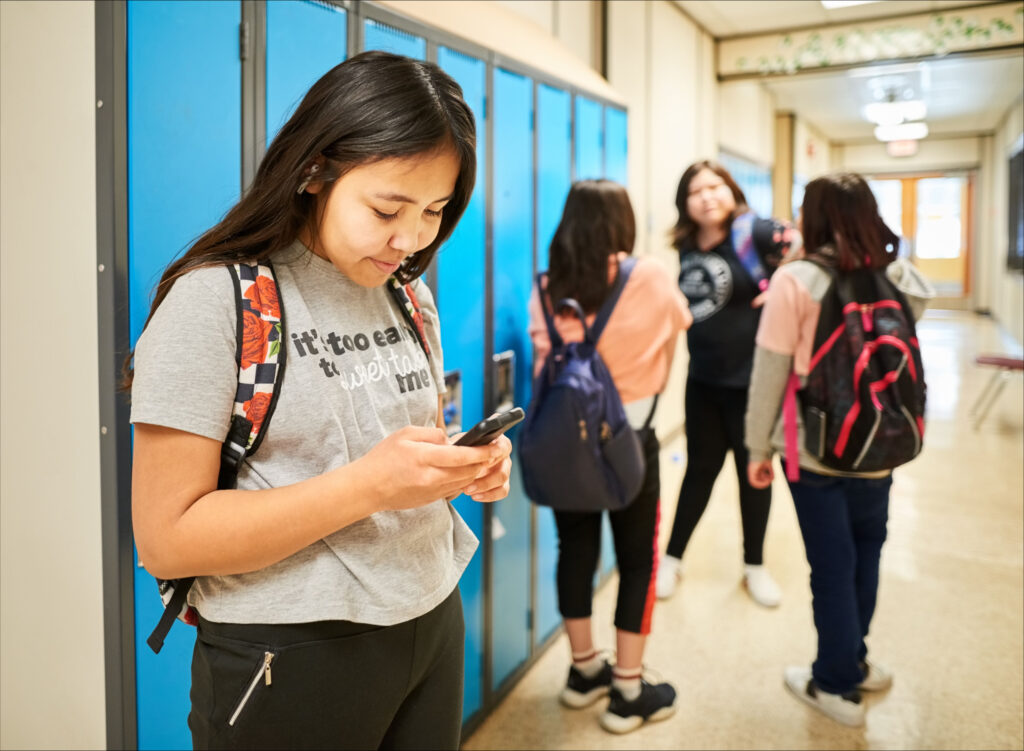
The Tribal Youth Justice Resource Center serves multiple Juvenile Healing to Wellness Courts that have a truancy reduction aspect or provide academic support services for the youth they serve. One such program is The Puyallup Tribe’s Juvenile Healing to Wellness Court (JHWC), which recently hosted a Truancy forum. The idea was to bring both tribal and non-tribal compulsory attendance specialists from as many schools as possible to a tribal community location and exchange policies, codes, protocols, to help tribal youth “transition” back to school amid all the challenges stemming from the COVID-19 pandemic.

The Truancy Forum clearly and openly stressed 3 main objectives: 1) Communicate, talk to each other and work on behalf of the tribal youth, not target them for non-attendance; 2) Collaborate, give the tribal programs (Such as JHWC Teams) the opportunity to staff, dialog and support tribal youth and their families before petition filing takes place; and 3) Celebrate successes of family engagement and attendance improvement regardless of how small it may appear to be, in any way possible, including incentives, recognition, or enhanced support.

The root causes of truancy are complex and multi-layered. A MSN News story titled “Millions of Kids Missing” alerted communities that our student population has not totally recovered from the impact of the pandemic. Many schools across the country are dealing with record numbers of youth that simply do not want to return to the public-school setting. A second article by MSN News titled “These Aren’t Snowflake Kids” identified the mental health challenges associated with students’ reluctance to return to school.

For information which may support new or developing truancy prevention programs, see the Tribal Youth Justice Resource Center’s recent (2022) publication Supporting Tribal Youth Attendance Achievement. The publication serves as a primer to assist with understanding issues of chronic absenteeism, truancy, prevention, and intervention processes. It addresses historic education policies and contemporary approaches utilized by Tribal communities to prevent and address truancy among Tribal youth. It also highlights helpful community-based approaches to support program development. The publication additionally includes strategic planning activities to support team-based program development, prevention program strategies to support American Indian and Alaska Native Youth, and helpful resources to support program partnership and community collaboration.

Link to publication: Supporting Tribal Youth Attendance Achievement

The Story of Elaine: The Impact of “Street Drugs” in Tribal Communities

By Chris Cuestas, Consultant, Tribal Youth Justice Resource Center, Tribal Law and Policy Institute

I have been trying to wrap my head around the fentanyl issue for the past year and have seen this monster of a trend, pattern, challenge, whatever you decide to call it, grow exponentially in tribal communities. I was faced with trying to figure out a way for tribal communities to see the impact that this is going to have on tribal youth and prepare for it.

While searching for a way to emphasize the challenge, I was riding a bus in Tacoma after a full day of work with a tribe I have been consulting with for about two years. I enjoy riding city buses because I often get the real story and the true impact of things in a community. I also like to take sandwiches to homeless camps because that’s where you witness the “impact” on people with limited options.

As we pulled up to a transfer station, I saw a young lady in her early thirties.  She was not hard to miss because she was wearing a blazing red shirt. I walked up to her and as I approached, I noticed that her shirt had a skeleton hand on it with the middle finger pointing upward. The text on her shirt stated, “F*%# Fentanyl”.

I asked her what her name was, and she told me her name was “Elaine.” Then I proceeded to ask her about her shirt and told her that I was a retired cop who currently provides technical assistance for TYJRC and TLPI.  She was curious about what we did, so I explained, and she thanked me for caring for people in tribal communities. She told me that she was half Native American from Oregon and had just moved to the Tacoma area. She explained that she wears the red shirt with the strong message because her little sister, who was 16, overdosed on marijuana that had been laced with fentanyl at a party. She also told me that another teen had died on the same evening. Both deaths were ruled accidental with no investigations. I was appalled to hear that. I told her what I was working on, and she said she felt that it was too early for her to use her little sister’s name, but I could use information from our encounter. She said she pays for all the shirts herself and gives them out to people after telling her sister’s story.  While I routinely interact with youth, this woman and her obvious anger and pain over the senseless loss of her sister really impacted me.  She was a native woman who lost her sister to something she struggles to understand.  It exemplifies the importance of educating our communities, tribal youth, and ourselves on the seriousness of the fentanyl problem in tribal communities.

If you are interested in learning more on this topic, join our upcoming Tribal Youth Justice Resource Center online learning event on May 2nd on the impact of “Street Drugs” on Tribal Communities. This will be part two in a two-part series to examine the current challenges associated with the street drug subculture and the impact on Tribal communities along with early indicators, what to look for, and where to look. Additionally, the online learning event will cover how technology is used for drug ordering along with Level II and Level III for responses of prevention techniques for families, communities, and programs.

If you are interested in joining but did not see Part One, reach out to our team at [email protected] and we will email you the PowerPoint and recording.

Registration Link for Part Two: Webinar Registration – Zoom

Healing Environments

By N. Benally, Training and Technical Assistance Specialist,
Tribal Youth Justice Resource Center

As far as I can remember, healing was a sentient experience. Entering the hogan, smelling the cool red clay earthen floor, smelling the cedar from the fire in the middle, feeling the soft silky goat hides, the plush hides of sheep and Pendleton shawls we sat upon. Listening to the hushed tones of conversation from relatives, elders, and clan relatives within the recesses of the circles, their bodies a faint outline cast from the faint glow of the kerosene lamp against the cedar logs of the hogan. The cedar fire emitting a faint popping as the glowing embers and pungent smoke spiraled upward through the opening in the center, mixing and slowly disappearing into the starlit night.

Among the Indigenous population, concepts of health and healthy living are holistically intertwined within social, physical, natural, and spiritual systems. On-going processes of colonization and experiences of environmental dispossession have had the effect of removing Indigenous Peoples from the lands, people, and knowledge sys­tems that have traditionally promoted their health. These practices have kept people healthy because they foster interaction with the land and its bounty of food and medicine, and because they strengthen cultural identities and deepen one’s sense of belonging. This socio-psychological legacy of trauma brings attention to the complex and cumulative nature of the ongoing impact of colonization. The concept of historical oppression is important to understand in relation to the experiences of Indigenous youth.

To understand healing in Indigenous communities, you must understand that healing dwells within a sacred space that shares three interconnected concepts – sharing of Indigenous knowledge, the social space to share this knowledge, and connection to the land.  In poet and songwriter Rita Joe’s (1989) poem about the loss of her Indigenous language at residential school, she writes, “I lost my talk / The talk you took away…let me find my talk / So I can teach you about me.” The “talk” is her language, which is integral to her cultural connection.

We are finding that when Indigenous people find their “talk”, they can open up a dialogue to begin sharing the core pieces of themselves. Rekindling cultural practices such as storytelling, talking circles, drumming, singing are just a few examples of how creating sacred spaces for healing to occur provides the foundation for Indigenous communities and their youth to find the space from which resilience can survive and thrive.

Cultural wounds demand cultural medicines – this is where our youth can express their “talk” – this space of reconnecting to everything and everyone allows them to access their collective vigor and resilience. Building this narrative to begin their healing journey to overcome the historical trauma, addictions, abuse, oppression and other effects is a passage for them to attain safe traditional wellness care. When we support our youth and families so they can recreate the knowledge of their Indigenous ancestors, we can listen to them and provide them the space to dream, to lead and to act in a way that strengthens their identities and transforms their lives, as we provide the framework within which they can continue to incorporate the knowledge of their ancestors – to create a dialogue and a space to regain our power to “talk.”

As the ceremony began, there was only the collective stillness yielding its healing power as the re-creation of our deities by name, color, direction until we all guided this collective power and restoration of balance and beauty ….. Hózhó náhásdlíí’. Hózhó náhásdlíí’. Hózhó náhásdlíí’. Hózhó náhásdlíí’.

Indigenous Ways of Engaging Youth

By Ethleen Iron Cloud – Two Dogs, Tribal Youth Training and Technical Assistance Manager,
Tribal Youth Justice Resource Center

Historically, in the Indigenous world view, children and youth were seen as the future of the people, and were to be cherished, protected and nurtured so they will become healthy strong leaders – in their home, community and Nation. Today, due to the impact of colonization on Indigenous people, many of our youth have not had positive, nurturing experiences growing up and this has had deleterious effects on their spirit often resulting in a general negative outlook on life. When children and youth with such experiences are referred to programs and services designed to help, staff and service providers may be confronted with behaviors from youth that challenge engagement.  For example, youth that have angry, rageful behaviors are sometimes labeled as “non-compliant” and/or “resistant” by service providers, which then impacts or limits the services the youth need.  Contrasting responses by service providers include listening with a non-judgmental ear, giving the youth time and space and using culturally based approaches to engage youth at the appropriate time.

One example is to focus on the relational approach or kinship with Indigenous youth; looking at and treating them as a relative instead of a “client” or “case” can lead to more effective engagement with youth. Bill Milliken, founder of Communities in School (CIS), said “It’s not programs that are transforming young people’s lives, its relationships” (Our Mission and History – Communities In Schools).  Indigenous societal structures were held together by kinship, this bond spoke to respect for one another, observance of boundaries and most importantly guided behavior with one another to be grounded in compassion. Dr. Martin Brokenleg’s work to “reclaim youth at risk” promotes restoring basic values in working with youth – compassion, loving care, encouragement and hope (http://martinbrokenleg.com/articles).  Traditionally, Indigenous children and youth had more than one mother, more than one father in that their Aunts and Uncles were seen as mothers and fathers respectively.  There was a shared responsibility for loving, cherishing, teaching and mentoring Indigenous children by all relatives and community, even if there were not related by blood. This gave the child/youth additional support and love to grow strong – physically, mentally, emotionally and spiritually.

So how can programs, schools, and community services engage Indigenous youth more effectively and how do we transform the historical and ancestral strengths and practices to be applied in contemporary settings? For example, using kinship terms with children and youth in schools, programs and communities can give youth a sense of “I belong”.  In one Lakota healing camp, depending on the age, every child is addressed as “Takoja” (grandchild), “Toska” (nephew) and/or “Tojan” (niece); as a matter of practice and in the interest of restoring kinship societal values and sending a message to the youth they are loved, cherished and they belong.  Another example is to look at the root of unhealthy behaviors, Indigenous people understood that every thought, attitude and behavior had a root; so trying to understand “what happened” rather than “what’s wrong” can lead to more engagement with Indigenous youth. 

Youth and Connections: Who are our children and youth connecting to?

By Deborah Tobacco, Oglala Lakota, Tribal Youth Programs TA Specialist, Tribal Youth Justice Resource Center

In cultures and societies where kinship is the foundation, children and youth have many opportunities to connect to mature adults. Studies show that the optimal environment for parenting is within a family structure that includes close knit groups of people that are able to maintain connection with each other throughout the day in a supportive role. Ideally a child or youth is naturally connected to their parent(s) and/or other care givers who can tend to them daily in all aspects of their being (mental, emotional, spiritual, and physical). In today’s society many parents and other caregivers work outside the home in order to provide for basic needs (home, utilities, and food). Therefore, it often takes time away from nurturing their children and youth to the fullest extent possible.

When children and youth do not have healthy, nurturing connections, they might reach out to others in an attempt to create a sense of belonging and acceptance. A child’s brain is naturally driven to connect, and may seek out peer groups, social media sites, chat rooms, and online gaming which can increase their sense of connectedness.  Having a sense of belonging is an important aspect of emotional development. However, unhealthy and/or unsafe connections when seeking connectedness and belonging can subject youth to harm, including cyberbullies, sexual predators and scammers.  Parents and caregivers are faced with the challenge of knowing who their children and youth are connecting with and how safe those connections are.  

Cultural connectedness can be a strength in establishing and maintaining healthy connections for Native youth.  Activities that build on cultural lifeways, such as creating a family tree, and honoring the relationship with the star nation relatives on the Winter Solstice or Spring Equinox, for example, can reinforce cultural identity and pride. Having a healthy relationship with a supportive adult besides a parent/caregiver has shown to contribute to a sense of acceptance and connectedness.  One activity to promote social connectedness is for communities to create safe spaces for youth to network and build healthy relationships. As you move forward with connecting with youth, whether it’s your own child/youth or someone in your program, the following are suggested questions for reflection:

1. How can I sensitively encourage children/youth to consider whether a connection is healthy or unhealthy?

2. What can families and communities do to foster opportunities for healthy connections for children/youth?

Hill D. L. (2006). Sense of belonging as connectedness, American Indian worldview, and mental health. Archives of psychiatric nursing, 20(5), 210–216. https://doi.org/10.1016/j.apnu.2006.04.003

In honor of Black History Month | A Grandmother’s Gift: My Ancestry of Warriors & Kings

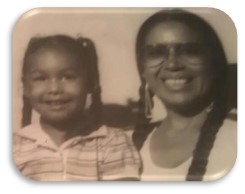
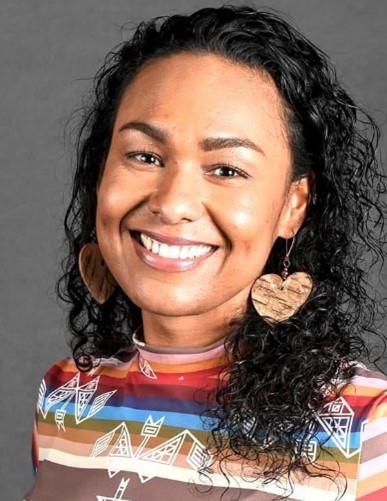
Pejuta Cangleska Win, Sacred Medicine Circle Woman, Tasha Fridia and her Grandmother, the late Frances Wise

February gives us an opportunity to celebrate and uplift Black History.  During this designated month, the collective whole in this country is encouraged to learn about the experiences, traditions, and contributions of African American people.  Just as in Indian Country the experience is not a monolith, there is no one Black experience that is all encompassing. Today, I share with you my experience that lies in a space where Indigeneity and Blackness intersect.

As I navigate the world, I am unsure of how people perceive me. Over the years I have been seen as African American, Puerto Rican, Dominican, Hawaiian, Mixed, and Indian just to name a few.  One thing I AM sure of is how I see myself.  I know who I am, I have always known who I am. I am Pejuta Cangleska Win, Sacred Medicine Circle Woman…I am an Indigenous woman who is also the descendant of enslaved Africans who hailed from powerful African Tribal nations.  This dual existence has given me strength, fortitude, resilience, and yes, many challenges.  In the 1980s when I was growing up, there were not many Indigenous folks that looked like me.  Being reared by my Wichita grandmother was the greatest blessing and indicator of who I would become. She was both my teacher and protector. My idol and my best friend.  She ensured that I was proud of all that Tunkasila  (Creator) made me to be.  Frances Wise grounded me in traditional culture and spirituality. She also made sure to teach me about Africa, slavery, Malcom X, and Martin Luther King Jr. She introduced me to and surrounded me with local African American civil rights activists like Clara Luper and Opio Toure.  I was lucky in that way.

Today, there are many more Indigenous children that look like me, including my two teenage daughters. Although many years have passed since my childhood, I find myself having to be their protector. In many Indigenous circles they are greeted with skepticism and forced to prove themselves. The irony of it all is that those two young ladies have cultural knowledge that surpasses any amount of Indigenous blood. They are their ancestors’ wildest dreams. As we seek to address the beauty, needs, and strengths of Indigenous young people, we must be intentional about the experiences of our Indigenous-African American youth. Often times they are walking in three worlds rather than only the two that we walk as Indigenous people. I challenge us as communities to look at how we welcome and treat our relatives with dark skin and curly hair.  We must look inward and question why we easily welcome our light skinned, light eyed relatives with open arms and keep our African American relatives at arm’s length. Are we taking on the viewpoints of our oppressor?  Despite all of my grandmother’s love and protection, I will never forget being a 5th grader being called the n-word for the first time.  I won’t forget the elderly lady at a powwow who made a snide remark about my skin color. Personally, I have felt no greater pain than the racism from my own people.  This has come from a variety of directions including some of my own extended family. I challenge us as Indigenous people to shift our lens and be good relatives.

Being a good relative can look like many things.  We must look inward as individuals and organizations to seek opportunities to do better and ask ourselves the hard questions.  How are we addressing our biases? How are we supporting our youth and communities to be more inclusive? What are we doing to address institutional racism? In the context of tribal youth programs and juvenile healing to wellness courts, we can explore how we are acknowledging the unique experiences of these young relatives.  We can move past acknowledgement and include strategies to support these unique experiences. We can be intentional in our efforts toward […] and understanding.  We can promote strengths-based language and concepts in regard to African Americans. Finally, and most importantly, we can ask our Indigenous-African American young people what they need and how we can best support them.

To all the Indigenous people that look like us, as we celebrate Black History Month, we celebrate all that you are, and REMEMBER you are the descendants of warriors and kings.